The first hours after you find water damage decide how much of your home can be dried — and how much has to be rebuilt. This is the order that protects people, property and your options.
Keep children and pets out of the wet area. If water is near electrical outlets, appliances or your panel, do not walk through it — switch off power to the area at the breaker only if you can reach it without crossing water. If you smell gas or see structural sagging, leave and call emergency services.
Close the fixture's shutoff valve, or the home's main water shutoff (often near the street meter or where the main line enters). For roof leaks during rain, a bucket and a tarp buy time; for rising water outside, sandbags and clearing drains help at the margins.
Before you move or discard anything, take wide and close photos and a slow video walkthrough of every affected room. Photograph the source if you found it. This record supports insurance claims and helps the professional understand the full extent.
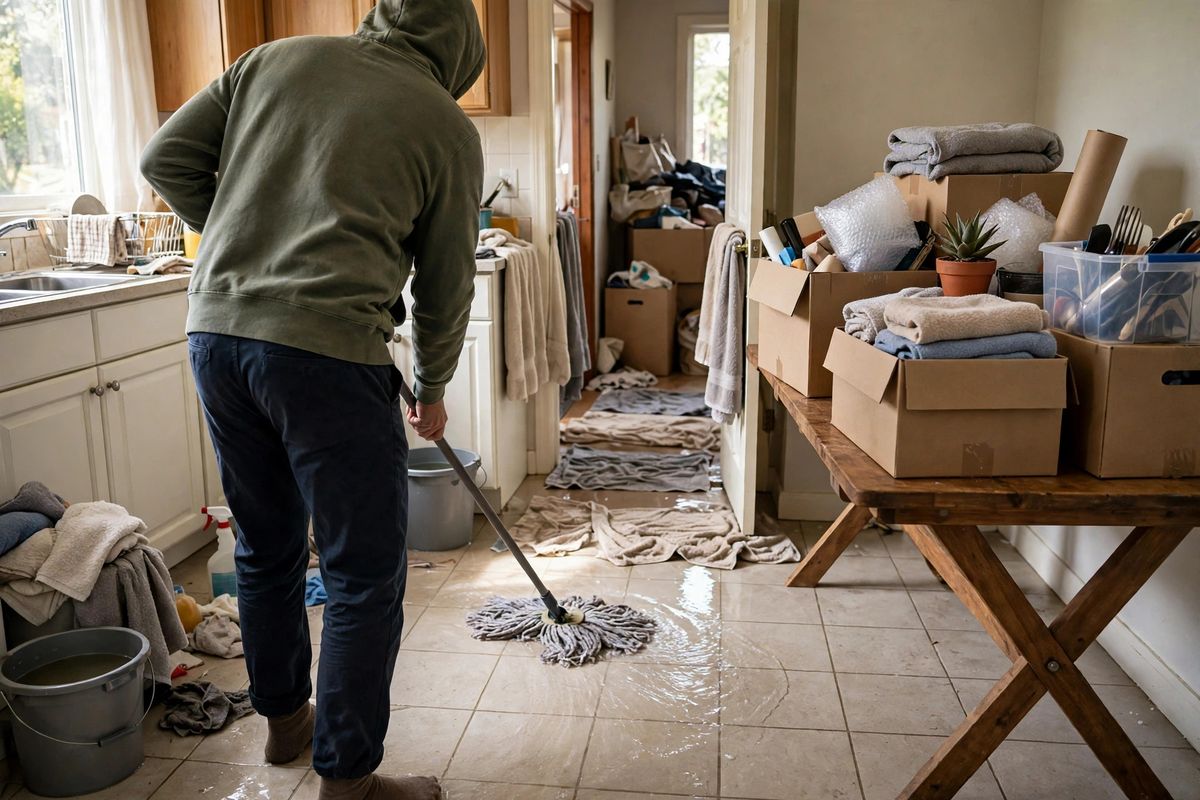
Mop, towel and wet-vacuum what you safely can. Lift furniture onto blocks or foil squares, move rugs, boxes and electronics to dry ground, and open windows for airflow if the outside air is drier than inside.
Household cleanup handles the surface. Professional extraction pulls water from carpet padding and flooring, and measured drying addresses the wall cavities and subfloor where mold actually starts. This is the step that decides how much of your home has to be rebuilt.
Note any musty odour, new staining or bubbling paint — signs that moisture remains somewhere hidden. Mention them when the professional assesses; they are clues, not failures on your part.
Document the damage with photos and video first — that helps either way. Then stop the water and get extraction started; insurers generally expect you to take reasonable steps to limit further damage. Many homeowners notify their insurer the same day and schedule the professional assessment in parallel.
For a small, clean-water spill on hard flooring, yes — prompt drying helps. For soaked carpet, walls, or a whole room, household equipment rarely dries the structure itself, and running electrical equipment in standing water is a hazard. When in doubt, treat it as a professional job.
If the source is a sewer backup, toilet overflow with waste, or outside flood water, keep people and pets out of the area, avoid skin contact, and say so when you call — contaminated water changes how the cleanup must be handled.
Work the checklist as far as it is safe to go, then call (425) 592-3426. Extraction and measured drying are the steps household equipment cannot finish — they decide how much of your home gets rebuilt.
