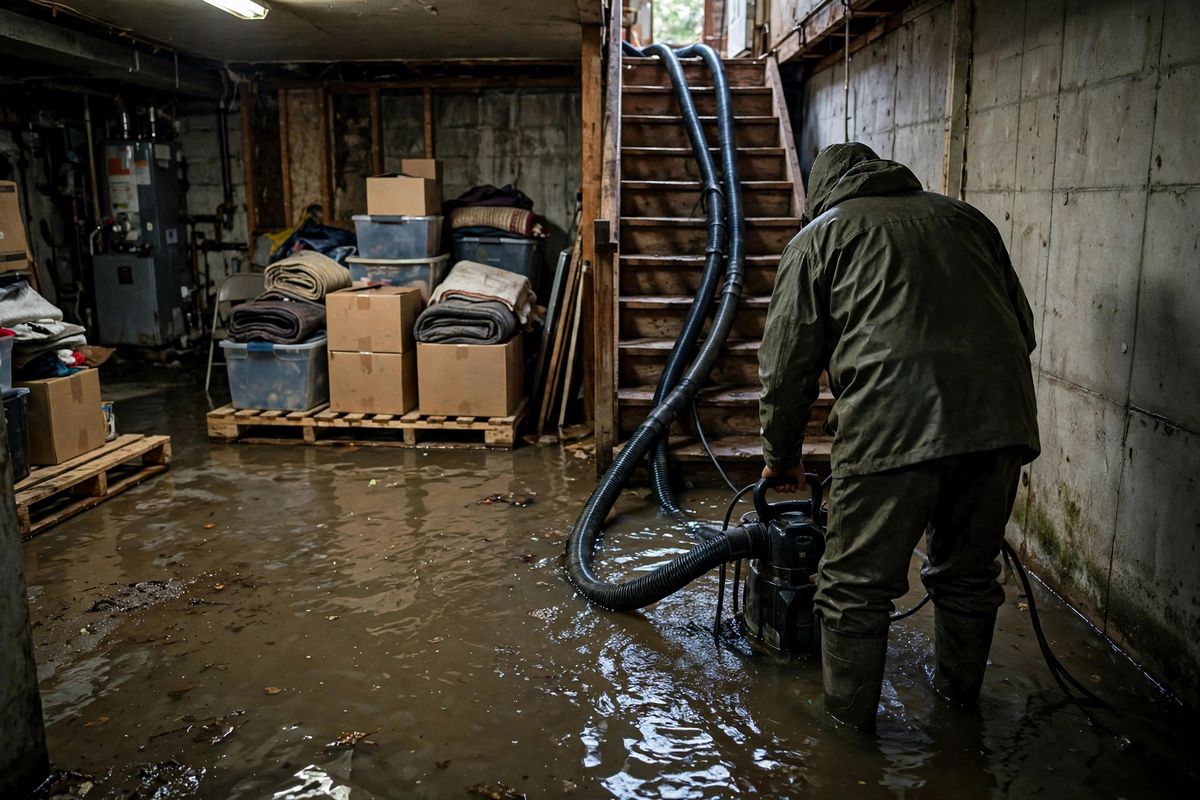
When heavy rain, rising groundwater or a swollen creek pushes water into a home, the response is different from a simple leak. Flood water carries soil, debris and contaminants, and it often arrives in the lowest parts of the house — basements, garages and crawl spaces.
Water that has passed over ground, streets or soil is categorized differently from a burst supply line, because of what it carries. Porous materials that absorbed flood water — carpet padding, drywall, insulation — generally cannot be reliably cleaned and are removed as part of professional flood restoration.
That is why a flood assessment matters: it separates what can be saved from what would trap contamination inside your walls if it were simply dried in place.
Free connection to an independent Renton professional.
Renton's terrain makes this real: valley-floor homes near the Cedar River and hillside homes with below-grade rooms face flooding in different ways. Either way, flood cleanup starts with safe water removal and a careful decision about which materials can be cleaned and which must come out.
Power to wet areas is isolated and the water's source is confirmed stopped or subsided before cleanup begins. Flood water is treated as contaminated.
Submersible pumps and extraction equipment remove standing water, followed by removal of silt, debris and materials that cannot be sanitised.
Salvageable surfaces are cleaned and disinfected, the structure is dried with professional equipment, and damaged finishes are repaired.
Be cautious. If water may be in contact with electrical outlets, panels or appliances, stay out until power is isolated. Flood water can also carry contaminants, so avoid skin contact where possible and let the professional guide the cleanup.
With flood water, usually not — porous materials that absorbed contaminated water are typically removed. Hard surfaces and some contents can often be cleaned and disinfected. The assessment confirms which is which.
If safe, stop further water entry, move valuables and documents above the water line, and photograph everything for your records. Do not run electrical equipment standing in water.
Standard policies often treat rising-water flooding differently from a sudden plumbing failure, and separate flood policies exist. Check your policy or insurer; the professional's documentation of the damage can still be useful either way.
Porous materials that soaked up flood water usually come out rather than dry out. Call and say the water came from outside — it changes what the professional brings.
