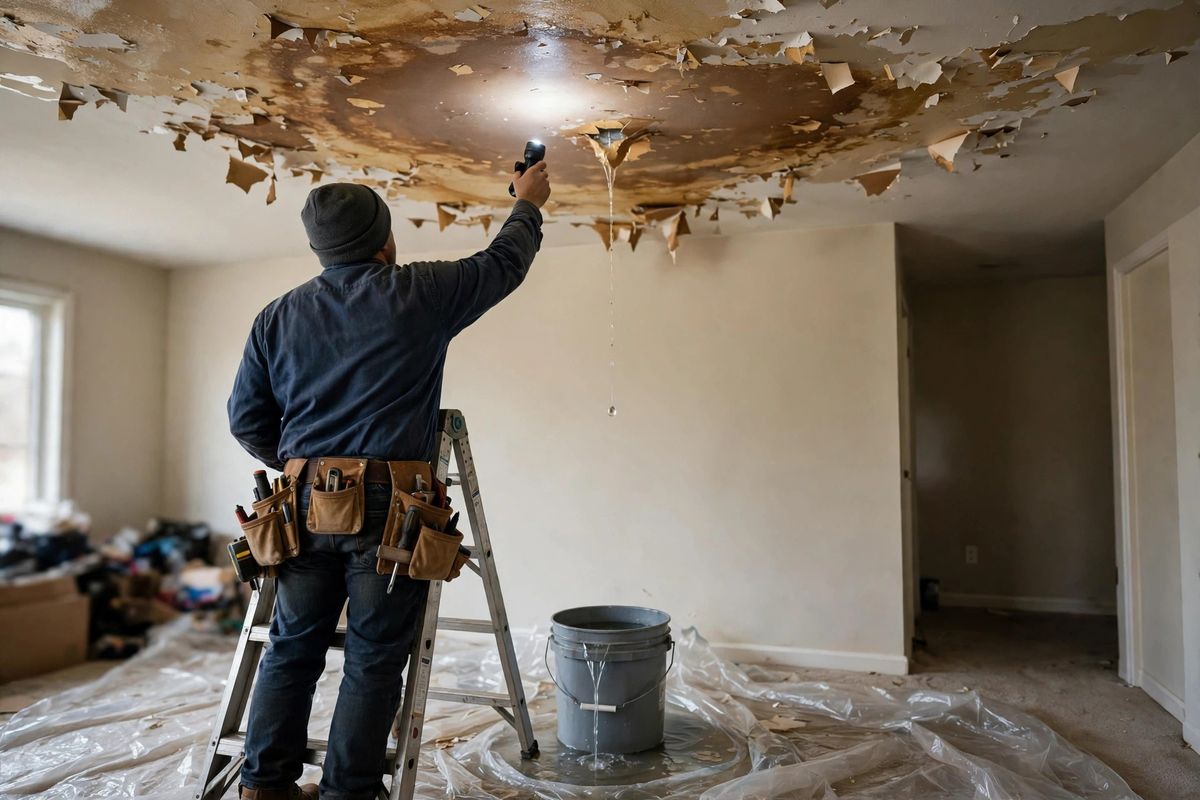
A ceiling tells on the floor above it. Brown rings, bubbling paint, a soft bulge over the kitchen table — each one means water has been travelling through the structure, sometimes for weeks, before it became visible. Ceiling repair is really two jobs: prove the leak is stopped, then rebuild the ceiling.
Water rarely drips straight down from its entry point. It runs along joists, pipes and the top face of the drywall, which means the visible stain can sit several feet from the actual leak. That is why ceiling repair starts with investigation rather than a patch.
It is also why a stain that “stopped growing” after a leak was fixed still needs a dryness check — the cavity above may have stayed damp long after the ceiling face dried.
Free connection to an independent Renton professional.
A sagging ceiling deserves particular respect. Saturated drywall is heavy, and a bulging section can come down without much warning. Keep people and furniture out from under it until it has been looked at.
The professional traces the stain back to its origin — bathroom, roof or pipe — because repairing the ceiling over an active leak all but ensures the stain comes back.
The ceiling cavity and surrounding materials are dried and moisture-checked; mold-affected material is removed where present.
Damaged drywall is replaced, seams are finished and textured to match, and the ceiling is repainted so the repair disappears.
Keep everyone out from under it and do not poke it yourself — a water-filled bulge can release suddenly. If you can place a bucket safely at the edge of the area without standing under the bulge, do so, then call for help promptly.
Painting over a dry, sound stain with a stain-blocking primer can work cosmetically, but only after the cavity is confirmed dry and the drywall is still firm. Soft, crumbling or moldy drywall needs replacement, not paint.
Timing is the clue: stains that grow during or after rain point to the roof; stains that grow after baths, showers or laundry point upstairs. The professional confirms with inspection and moisture readings rather than guessing.
Matching common textures — smooth, orange-peel, knockdown — is a standard part of ceiling repair. The professional will discuss the expected match during the assessment.
Keep everyone out from under it and call. Tracing that stain back to the real leak — roof, bathroom or pipe — is job one.
