
Water Damage Restoration
Full cleanup, drying and restoration coordination after leaks, bursts and appliance failures.
Water Damage Restoration in Renton →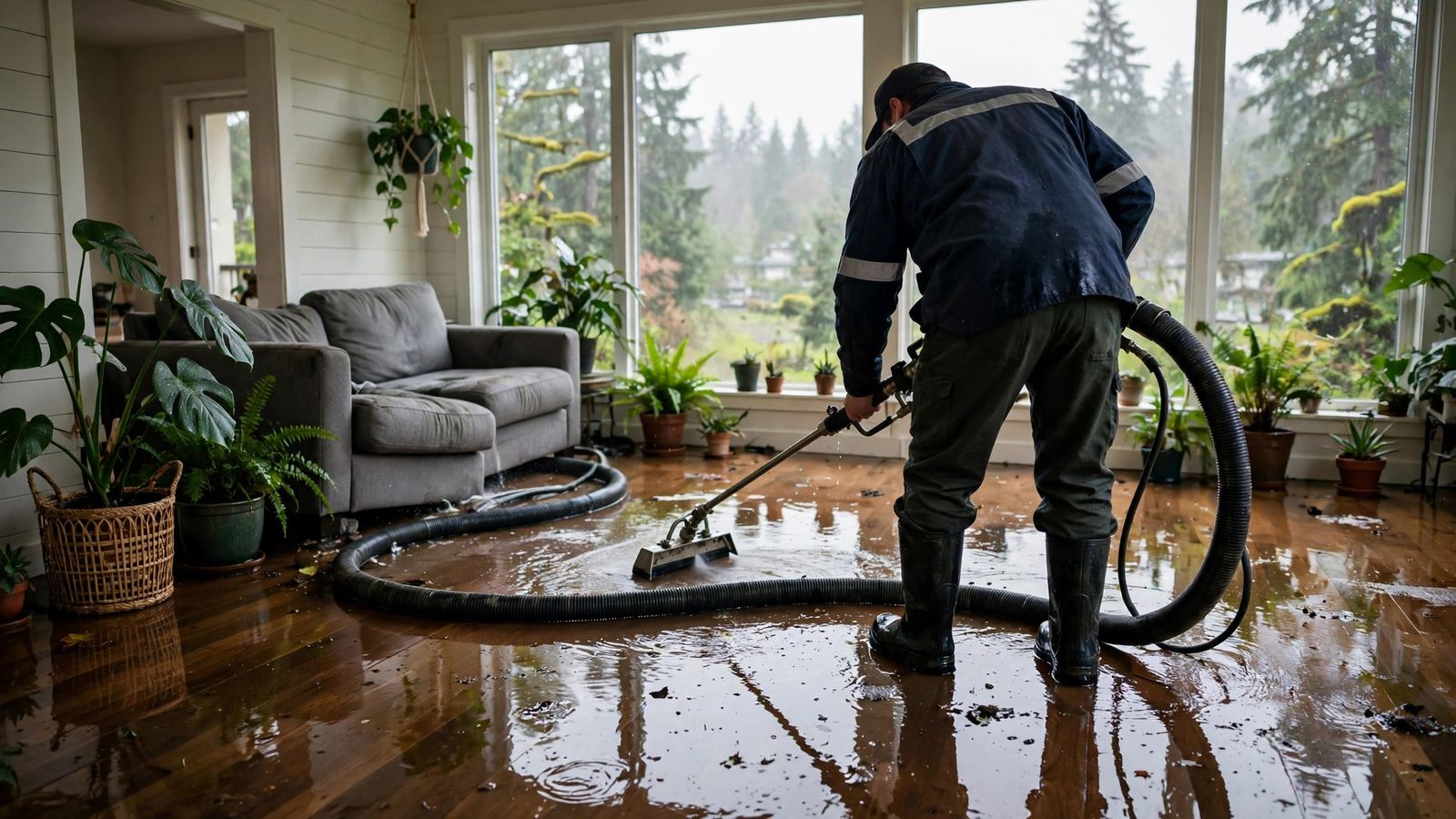
A burst pipe, a failed water heater, a flooded basement — water damage spreads quietly and gets more expensive by the hour. Renton Water Damage Pros connects you with an independent local restoration professional who can assess the damage in person. One call, no obligation.
Water damage gets worse on a schedule, not yours. One call puts your request in front of an independent Renton professional — here is how it goes:
Rather write it down? The request form lives on our contact page.
No directories to scroll, no guesswork about who serves your street.
Call (425) 592-3426. A few details — where the water came from, which rooms are wet, your ZIP code — are enough to route your request correctly. If the water has stopped and it can wait, the short form on the contact page does the same job.
We pass your request to an independent water damage professional who covers your part of Renton, and they contact you to arrange an in-person assessment.
The professional inspects the damage, explains what needs drying, removal or repair, and you agree any work and pricing directly with them. Nothing is booked on your behalf.
Different sources of water need different responses. Pick the closest match below — and if none of them fits, call and describe what you see. That is enough to route you.
Full cleanup, drying and restoration coordination after leaks, bursts and appliance failures.
Water Damage Restoration in Renton →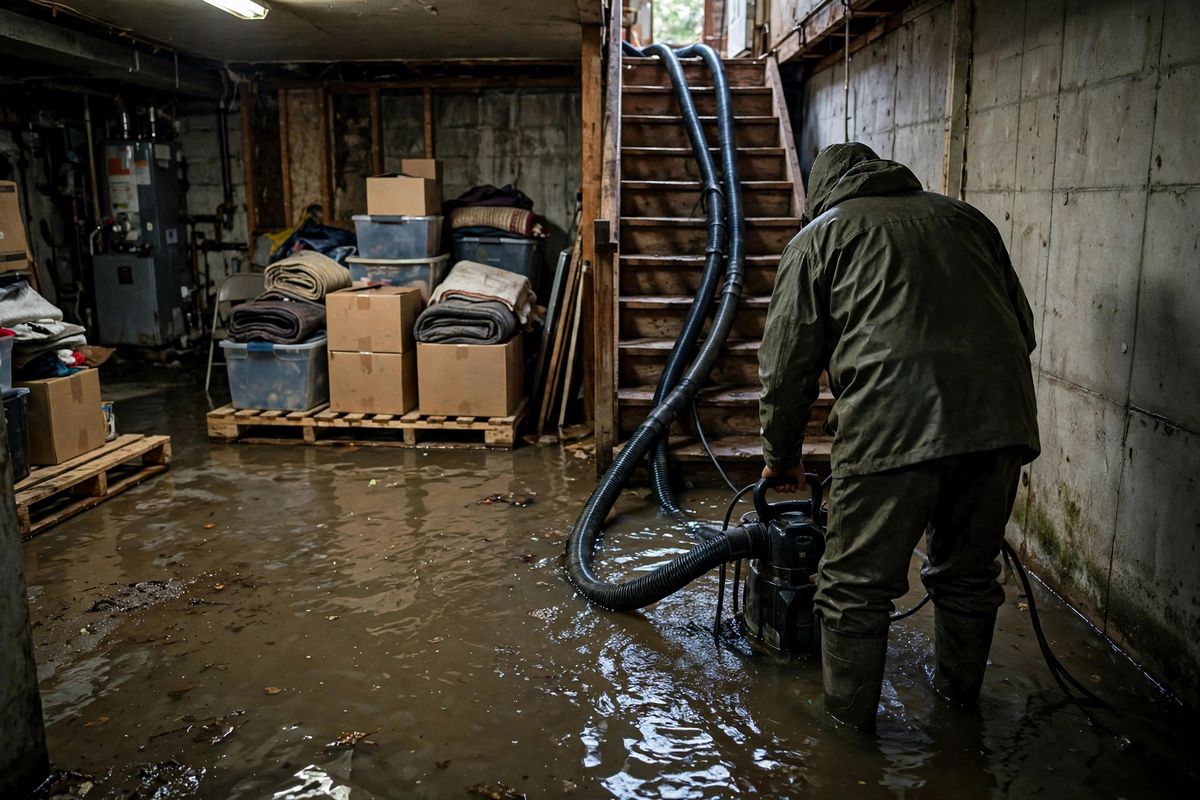
Help after heavy rain, rising groundwater and flooding reach inside your home.
Flood Damage Restoration in Renton →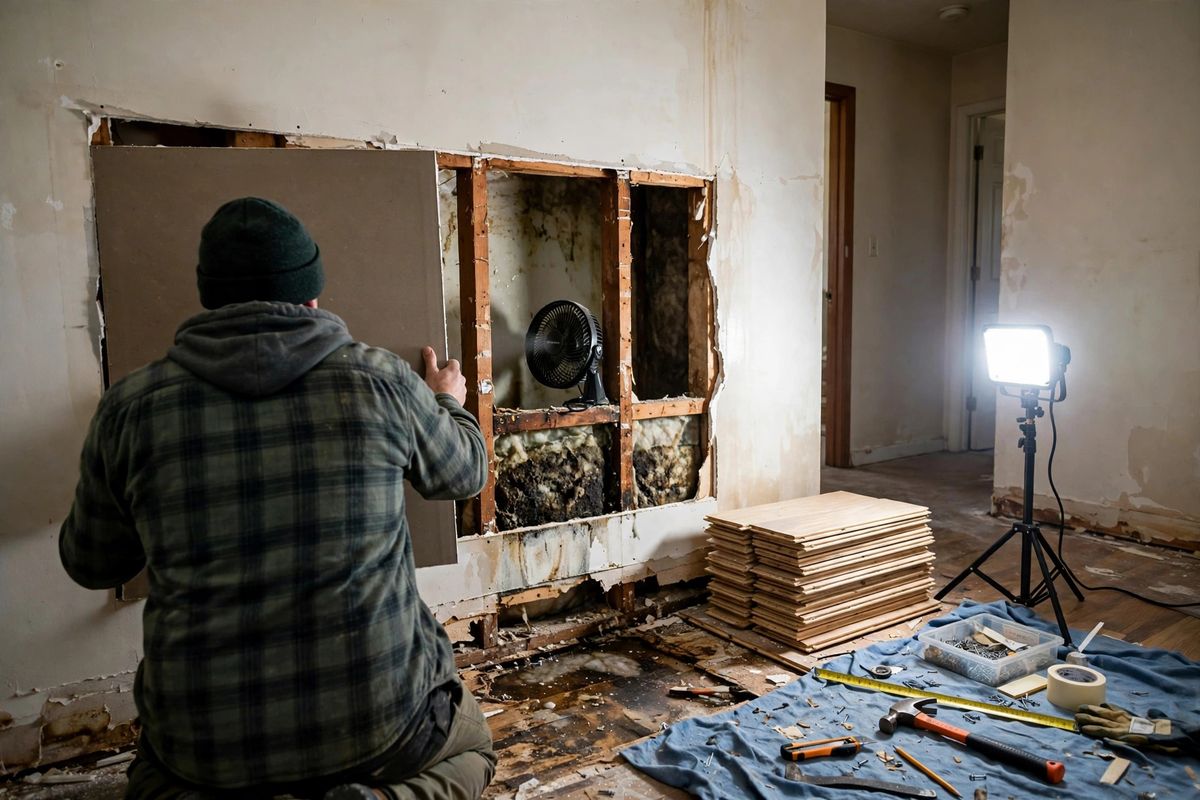
Repair of the drywall, flooring and finishes that water leaves behind.
Water Damage Repair in Renton →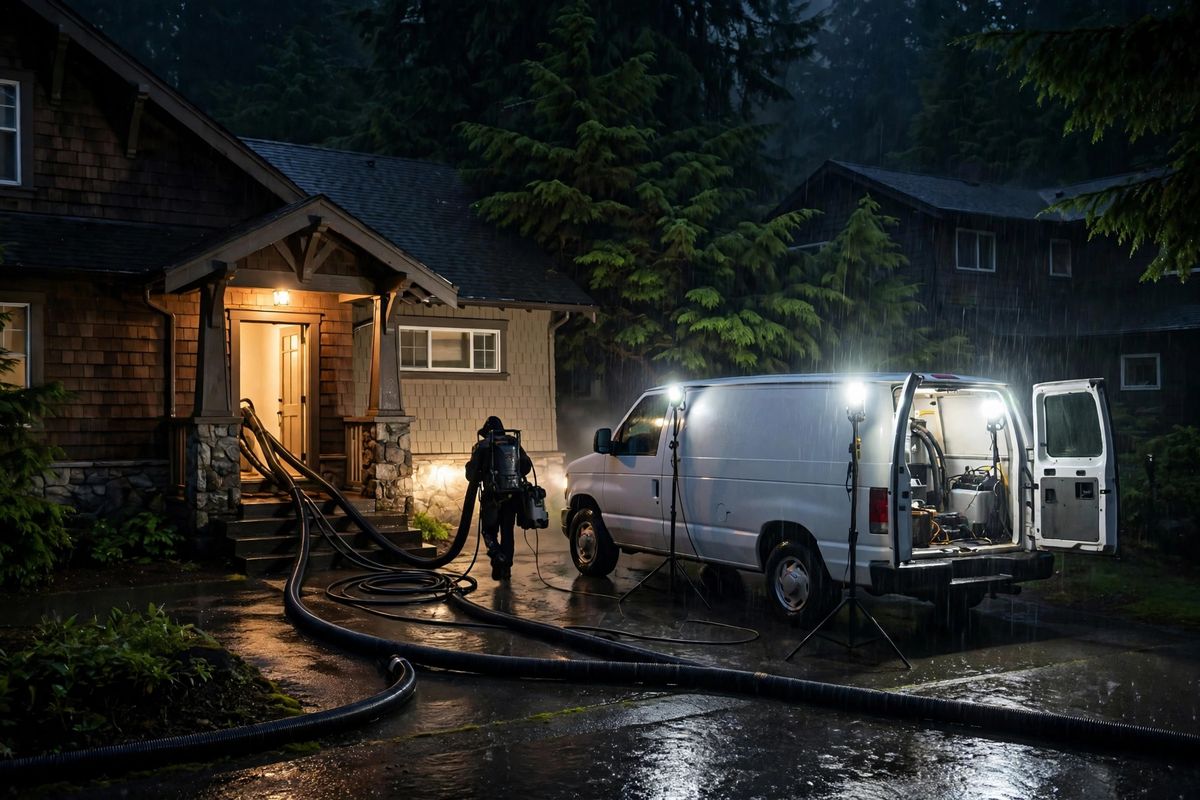
Standing water that cannot wait until morning needs extraction first, questions later.
Emergency Water Removal in Renton →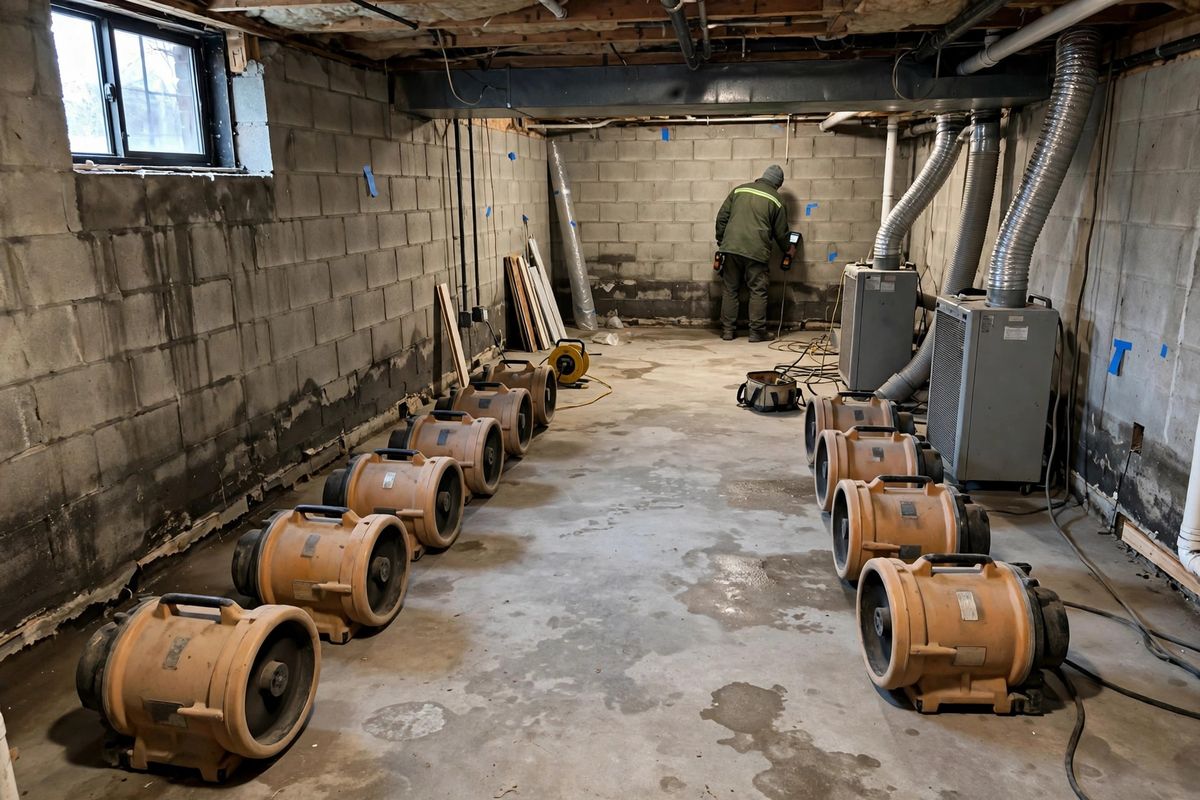
Basement-specific drying for Renton's hillside and split-level homes.
Basement Flood Restoration in Renton →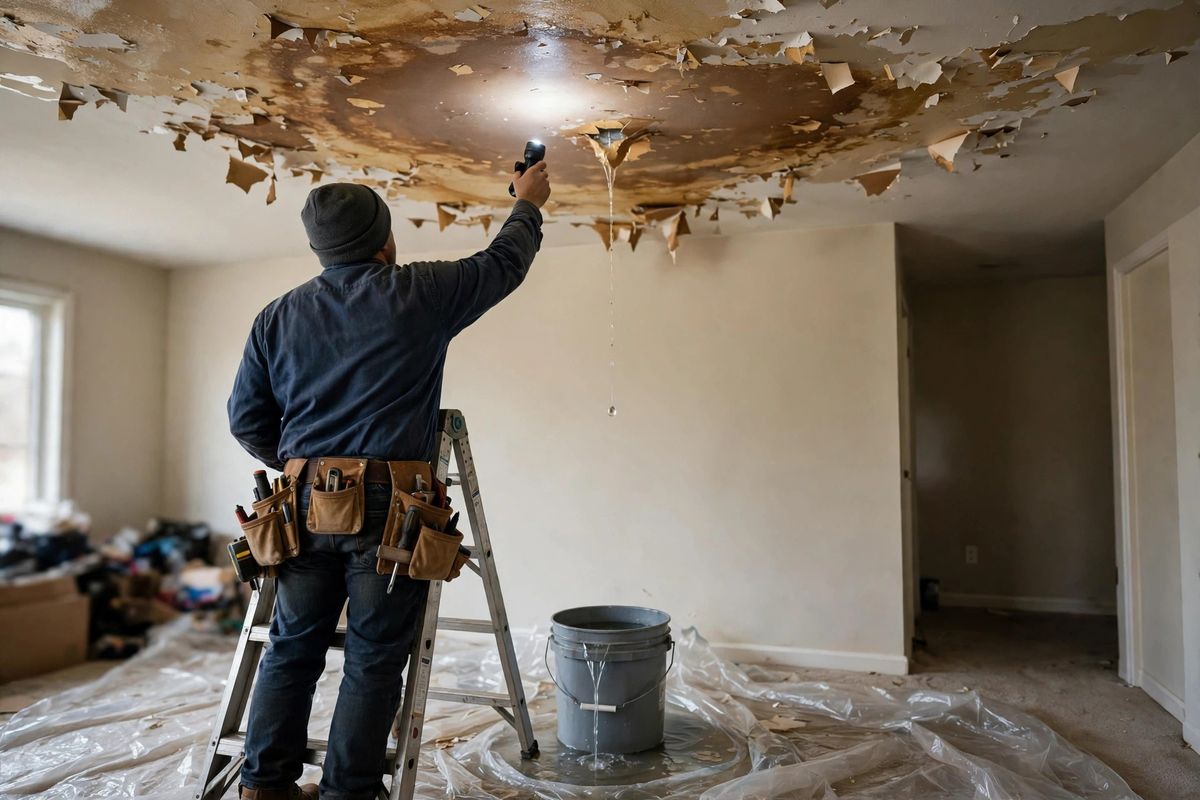
Ceiling stains, sagging drywall and slow drips from the floor or roof above.
Ceiling Water Damage Repair in Renton →Almost every call traces back to one of a handful of sources — and which ones dominate depends on the age of the house.
A tank water heater holds 40 to 50 gallons and refills as it drains, so a failed tank or fitting does not empty once — it keeps going until the supply is shut off. Most tanks are rated for roughly a decade of service. In Talbot Hill's 1990s homes, original-era heaters and their replacements are both squarely in the failure window.
The flexible lines feeding toilets, sinks, dishwashers, washing machines and ice makers are the most common single point of failure in newer homes. They split at fittings, often at night or while the house is empty, and a line that runs for a weekend can soak two floors through the cavities between them.
Fairwood's 1960s and 1970s subdivisions still run on galvanized and early copper supply lines and cast-iron drains in many homes. Galvanized pipe corrodes from the inside, so the first symptom is often the failure itself: a pinhole leak inside a wall that has been wetting the cavity for weeks before a stain shows.
Long Pacific Northwest rain finds failed flashing, worn valleys and gutters that overflow against the siding. Below grade, window wells, stairwell drains and sump systems that fall behind during a storm push water into basements and daylight lower levels — the pattern hillside neighbourhoods from Kennydale to the Highlands know well.
Downtown Renton sits flat, near the Cedar River. Older homes there combine the city's oldest plumbing with high groundwater, so water arrives from two directions: slow internal leaks above, and seepage through foundation joints and clay sewer laterals below during severe weather.
Failed caulk, a wax ring that no longer seals, a shower pan cracked at the drain — bathroom leaks rarely announce themselves. They wet the subfloor and the ceiling below a little at a time, and they sit behind a large share of ceiling stains and soft floors.
Clean water does not stay clean. The longer materials stay wet, the deeper the damage goes — and the more of the home has to be torn out instead of dried in place.
Stop the source if you safely can — the fixture valve, or the main shutoff near the street meter. Kill power to wet rooms at the breaker if water is near outlets. Photograph everything before you move it. These four moves, done in the first hour, decide how much of what follows is drying and how much is demolition.
Water wicks up drywall, swells wood flooring and soaks carpet padding. Furniture finishes can bleed into carpet. Most contents can still be saved if extraction starts now.
Mold can begin growing on damp drywall, paper and wood in as little as a day or two, especially in closed, warm spaces. Odors set in as materials stay saturated.
Warped floors, crumbling drywall and structural swelling become much more likely. What could have been dried often has to be demolished and rebuilt instead.
Professional drying equipment — air movers and dehumidifiers placed after extraction — is what stops a wet room from becoming a demolition project.
The connection takes a phone call. The work at your house follows a sequence, and each step has a reason.
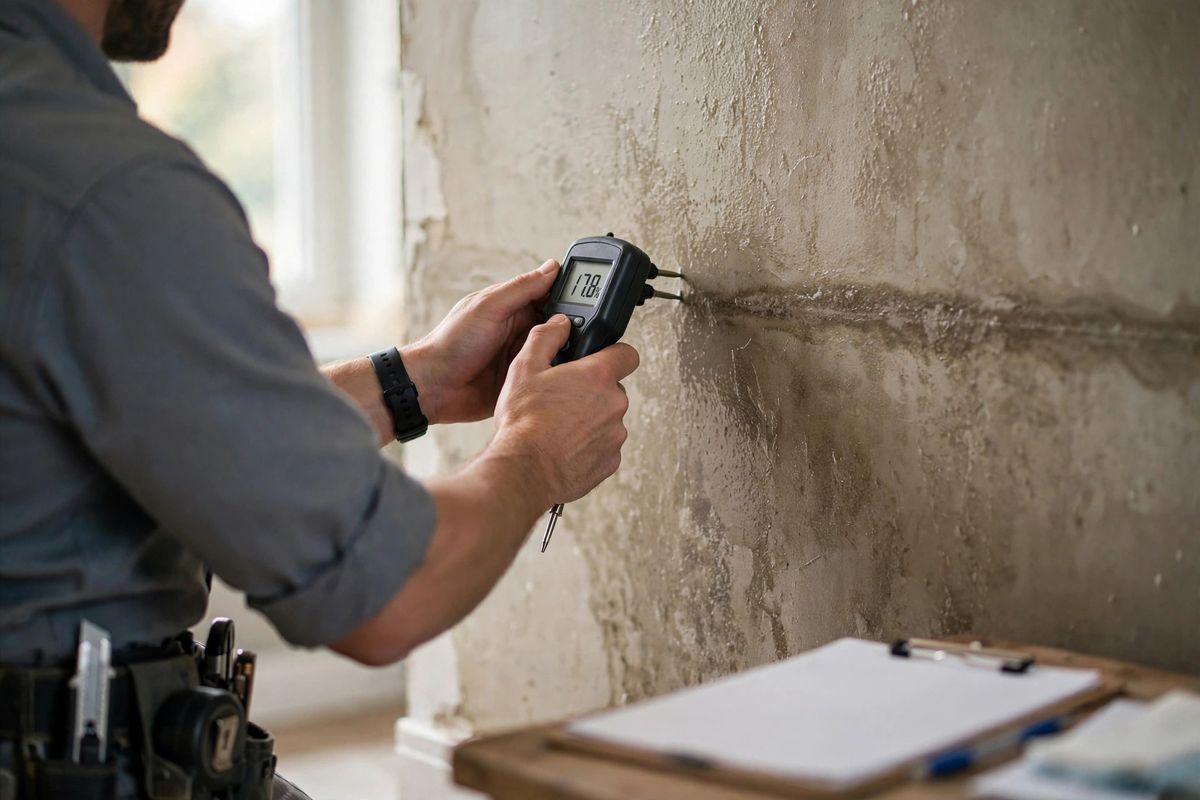
The visit starts with the leak stopped and confirmed stopped. Then the professional maps how far water travelled using moisture meters and probes — into wall cavities, under flooring, along the bottom plates of walls you cannot see inside. The map, not the visible stain, sets the scope.
Pumps and extractors pull standing water out of carpet, padding and hard floors. Extraction removes far more water than mopping ever reaches, and every gallon out is a gallon the drying equipment does not have to evaporate later.
Some materials dry in place: framing, many hard floors, clean-water carpet. Some cannot: soaked padding, crumbling drywall, wet insulation. You hear which is which, and why, before anything is removed.
Air movers and dehumidifiers are placed against the moisture map, then readings are re-taken as drying progresses. Equipment moves or comes out as areas reach normal levels. Dry is a measurement here, not a guess based on how the surface feels.
Once readings say the structure is dry, the rebuild conversation starts: drywall, flooring, trim, paint. What that costs and how long it takes is agreed between you and the professional, with the moisture record behind it.
This service covers five Renton ZIP codes. Each has its own housing stock — and its own water damage patterns — so we maintain a dedicated page for every area.
See the full service area details →
Hillside streets south of downtown, led by 1990s construction now in the water-heater and supply-line failure window, with older pockets mixed in and a large share of rental homes alongside owner-occupied ones.
Renton's Lake Washington shore. Mid-century originals with aging galvanized and cast-iron plumbing sit beside newer lakeside builds, and the ZIP's northern edge reaches into Newcastle — coverage there is confirmed by exact address.
The urban core: historic valley-floor homes near the Cedar River, plus apartment buildings where one unit's leak becomes the ceiling of the unit below. Requests here often come from landlords and property managers.
Renton's largest neighbourhood by households, and its oldest large-scale stock: roughly four in ten homes date from the 1960s and 1970s, mostly owner-occupied single-family houses with split-level lower rooms.
Newer, larger homes on the plateau, many with finished lower levels against the hillside. Fewer failures than the old stock — but each one lands in finished space, which raises the stakes per incident.
Nobody can price a wet wall over the phone, and this site does not publish ranges — quoted blind, they mislead. What an assessment is really pricing: how much water ran, and for how long; clean supply water or contaminated; how far it travelled inside walls and floors; what must come out versus what dries in place. The one factor you control is time.
We are a free connection service. Call (425) 592-3426 and tell us what happened — where the water came from, which rooms are wet, your ZIP code — and we connect you with an independent water damage restoration professional who serves your part of Renton. The professional assesses the damage in person and you decide directly with them how to proceed.
This service covers Renton ZIP codes 98055, 98056, 98057, 98058 and 98059 — including Talbot Hill, Kennydale, downtown Renton, Fairwood and East Renton Highlands.
If you can do it safely, stop the source: shut off the water supply to the leaking fixture or the home's main valve, and turn off electricity to wet areas at the breaker if water is near outlets. Move belongings out of standing water, take photos for your records, then call for help. Our guide on what to do after water damage walks through the first hours step by step.
No. Renton Water Damage Pros is a referral service, not a contractor. We connect you with independent local professionals; any inspection, work, pricing and scheduling is agreed directly between you and the professional.
Timing depends on the professional's schedule and the urgency of the situation. When you call, explain if water is still actively flowing or standing — urgent situations are flagged as such when your request is passed along.
Documentation is a normal part of an assessment — photos and moisture readings that show what was wet and how far it spread. Whether a loss is covered is your insurer's decision, but a proper record is what any claim stands on, so take your own photos before anything is moved.
Tell your landlord or property manager first — in most rentals they must authorise restoration work. If you manage or own rental property in Renton, you can request a connection yourself; say which units are affected, including any unit below a leak.
Requesting a connection through this site or by phone is free for homeowners. The professional you are connected with will explain their own assessment and any costs for work directly before anything is agreed.
Tell the person who answers what happened and your ZIP code. Your request goes to an independent Renton professional who covers your neighbourhood — they call you back to arrange the in-person look.