Renton's hills mean a lot of basements — finished daylight basements in the Highlands, older cellar-style spaces in Fairwood, split-level lower floors all over the city. They are also the first place water collects, whether it arrives from a failed sump pump, groundwater, or a burst pipe upstairs.
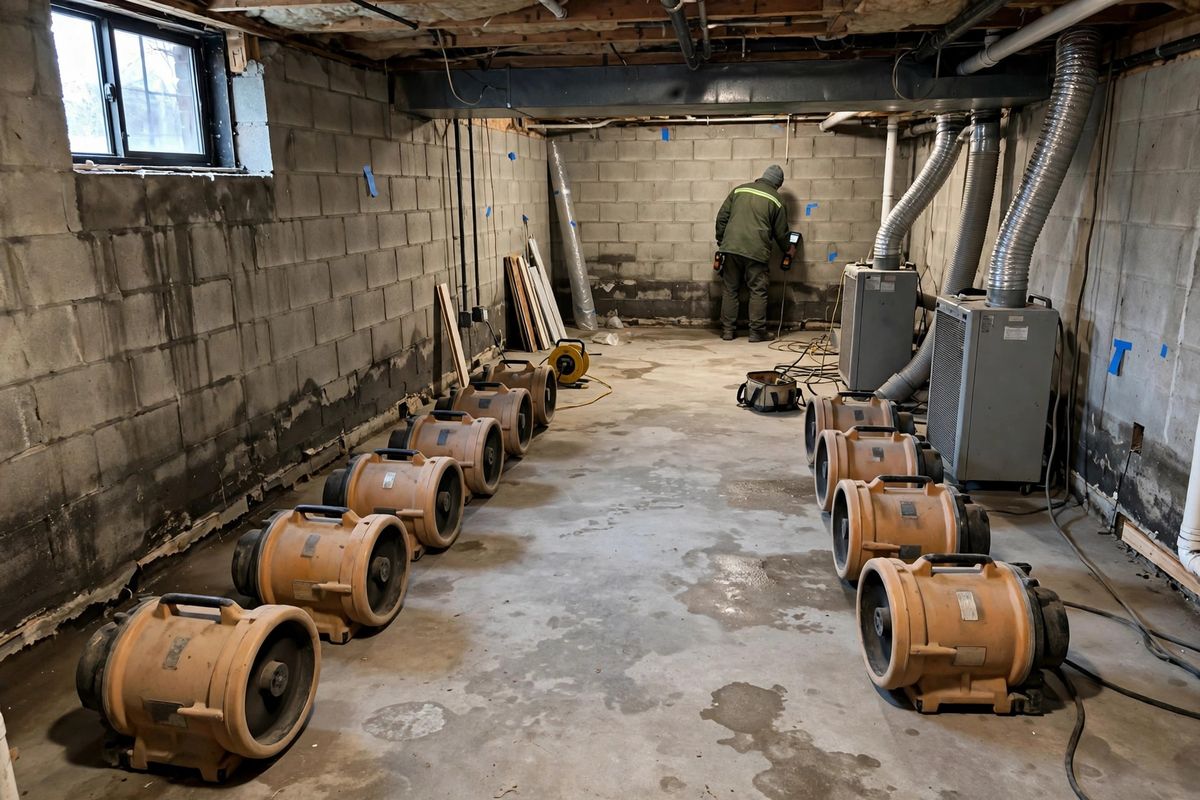
A shop fan pointed at a wet basement is fighting physics: cool below-grade air holds moisture against concrete, and every finished surface slows evaporation. Professional basement drying is measured — humidity and material moisture are tracked day by day, and equipment is adjusted until the numbers say dry.
Finished basements deserve extra urgency. The carpet may feel dry while the pad and the bottom plate of the wall behind it are still wet, which is where hidden mold colonies usually start.
Free connection to an independent Renton professional.
Basement flooding has its own complications: water pools against foundation walls, soaks into carpet and paneling, and sits in the coolest, least ventilated part of the house — which is exactly where mold likes to grow.
Standing water is removed and the contents are sorted: what can be cleaned, what must go. Stored items in cardboard rarely survive; hard goods often can.
Wet carpet padding, baseboards and lower drywall sections are removed where needed so the slab and framing can actually dry.
Dehumidifiers sized for below-grade spaces and air movers run until concrete, framing and wall cavities reach normal moisture levels.
An inch across a whole basement is hundreds of gallons, and it has already wicked into walls and contents. It deserves the same extraction-and-drying response as deeper water — the depth matters less than the spread.
Sometimes, if the water was clean and caught quickly, in-place drying works. If padding is soaked, drywall has wicked water, or the water was contaminated, partial removal is usually the honest answer. The assessment uses moisture readings, not guesswork.
Move what you can to a dry area as soon as it is safe. Porous items stored on the floor — cardboard boxes, upholstered pieces — are the most vulnerable; the professional can advise what is salvageable during the visit.
After cleanup, ask the professional about the entry point: sump capacity, drainage, foundation cracks and grading all play roles. Fixing the route water took is part of a complete restoration conversation.
Basement water spreads wider than it looks, into walls and stored boxes and the furnace corner. Call with your ZIP code and what is wet — the sooner drying starts, the more of the basement survives.
